You Are Paying a Coordinator to Be a Copy-Paste Machine
The Line Item Nobody Puts in the Budget
Take your most experienced BIM coordinator. The one who can look at a section and know the duct is going to hit the beam. Now count how many hours a week that person spends working out which model version is current. For a lot of teams it is about 11 hours.
That is not coordination. It is clerical work. Someone pulls the latest export, finds the matching markup, checks which revision it belongs to, and pastes the note into a tracker. Repeat for every discipline, every floor, every email thread. By Friday you have a tidy list and no idea whether any of it still matches the model the architect sent Wednesday morning.
Here is the part that stings. Your most expensive coordination brain is doing the least valuable task on the project. You hired that person to find the conflict between the mechanical run and the structure before the crew gets there. Instead they are comparing one file name to another in two windows, at 4:47 PM on a Thursday.

Hours lost to this are easy to wave off because they are spread thin. Twenty minutes here, an hour there. But 11 hours a week is more than a full working day, every week, on work that adds nothing to the model. And the cost does not stop at payroll. Every hour spent finding the current version is an hour not spent finding the clash while it is still about $50 to fix.
So before you look at any tool, measure the task. Sit with your coordinator for one afternoon and count the reconciliation cycles. In most firms the number is higher than anyone guessed.
Where the Hours Go
The first bucket is export and reformat. The model comes out of Revit, the files land in a shared folder, and someone renames and sorts them so the team can tell them apart. Nobody's judgment is involved, and nobody will ever thank you for it.
The second bucket is reconciliation. The architect issued a revision. Now you have two sets of files, and you need to know which elements moved, which stayed, and which are entirely new. On a building with 1,200 doors, a hundred flipped swings are a rounding error in the model and a field problem if you miss them. Someone has to find that difference by hand, because nothing in the folder surfaces it.

The third bucket is chasing. Who has the current markup? Which trade acknowledged the change? Is the note in Teams the same as the one in email? Each question is small. Stacked across a full coordination cycle, they eat a day.
The fourth bucket is the redo. This one is not scheduled. The client changes a layout on a Tuesday, the model updates, and the clash list you built on Friday is now partly fiction. Someone drops everything and rebuilds it. That redo lands inside a deadline that just got shorter, which is exactly when things get missed.
None of these four buckets need coordination judgment. All four need attention, patience and a tolerance for repetition. That is the definition of work you should stop paying a specialist to do. Firms keep paying not because they have not noticed, but because they have not found a workflow that survives a real project schedule.
What Happens When Every Export Is a Snapshot
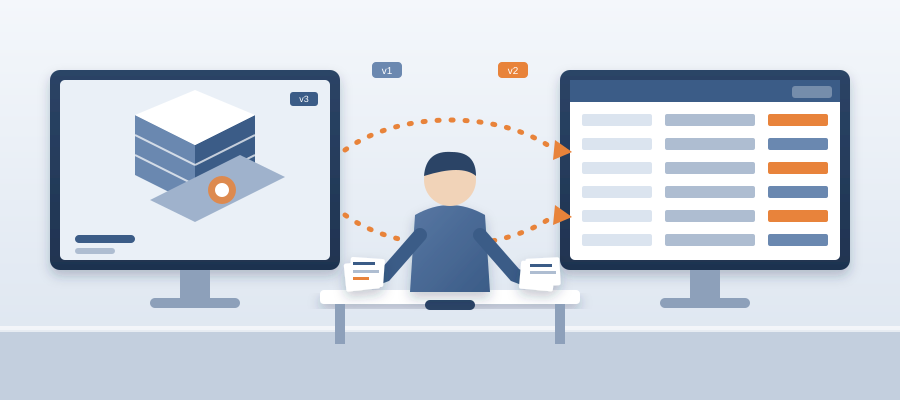
BidLight keeps one live record of the project inside Revit and Navisworks. You publish straight from the model, and each publish becomes a versioned snapshot with its own files, author and milestone. Any two revisions compare element by element, grouped by category: structural, MEP, envelope, interior.

The reconciliation does not get faster. It stops existing. You open two revisions and see what moved, in about 15 minutes instead of a 90-minute meeting. The 11 hours a week of hunting for the current version turn into a screen you read once.
Think about what that does to a late revision. The client moves a corridor wall. The new publish goes in, and the diff shows every element that changed and which category it sits in. You walk into the meeting knowing what the move touches and who has to act on it. That is a different conversation than promising to get back to them by Friday.
This is where tools and people stop competing and start dividing the work. Let the diff do the finding. Point your senior coordinator at the parts that need a human: whether the sequence is buildable, whether the fix proposed by one trade breaks another, whether the issue is actually closed. A closed issue in BidLight carries a screenshot, a tagged user and the model commit that fixed it, so you are checking proof instead of chasing it.
Teams that make this switch describe the same thing. The model becomes the record, not a file someone has to interpret. The coordination meeting gets shorter because nobody argues about which version is on screen. And the coordinator stops ending the week tired from work that produced nothing anyone could point to.
The Return Shows Up in the Field
Saved hours are easy to talk about and hard to feel. Field problems are the opposite. You feel every one of them, usually in the weeks after, when a crew is standing around waiting on an answer.

An unresolved clash can burn $15K to $50K a week in idle field labor. A clash that sat 47 days can run to $28,000. Compare that with about $50 to fix the same clash in the model, and $5,000 to $50,000 once it is found in the field. The gap is not about talent. It is about when someone saw the conflict.
When the diff and the issue record live in the same place, the question of what changed gets answered from one source. Nobody is hunting between the trailer and the office. The person who owns the fix gets the 6am digest, and the project view shows who is behind while there is still schedule left to move work.
The hyperscale programme is the example we can point to. It ended with 18,000+ hours saved, 8,900+ issues resolved and $12.3M cost saved. Those hours were never work anyone wanted to do. They were the tax paid for having models that could not tell you what changed.
Give the Time Back to the Model
Here is the other side of the ledger. The coordinator you have buried in reconciliation also holds expertise the whole project needs. Early clash review, sequencing conversations, trade-by-trade walkthroughs. That work has real value, and it only gets done when someone has the time.

BidLight is priced per licence, from Basics at $260 per licence per year to Max at $590, with custom Enterprise pricing and unlimited projects on every plan. Compare that with 11 hours of your best coordinator's week. The trade is not close, and it does not need a long procurement cycle to test. Run one project through it and compare the hours.
Beyond the software, BidLight does done-for-you BIM work: execution plans, 4D sequencing, fabrication detailing and spooling. Some firms want the tool and will run it themselves. Others want the output and will hand it off. Both are better than absorbing the clerical cost quietly inside the schedule.
Start With One Project
Do not change the whole coordination process in a single quarter. Pick the next project where the design team is known to issue frequent revisions. That is where the reconciliation tax is highest, and where the change will be most obvious to everyone involved. Run the current job the old way and the next one on BidLight.
Track four things. Hours spent working out the current version. Time from model update to knowing what changed. Number of markups that had to be matched to a revision by hand. And how your coordinator describes their week on Friday afternoon. Those numbers will tell you more than any demo, and they will be specific to your firm, your building types and your people.

Expect the first reaction to be relief, not excitement. Coordinators do not enjoy the reconciling. They assume it is part of the job because it always has been. When the snapshots and the diff do it for them, the reaction is usually some version of finally, and then they go back to the work they trained for.
The takeaway is simple. You are spending 11 hours a week on a task that adds nothing to the model, and you can stop. The salary stays the same. What changes is what it buys. Give your coordinator that time back and point it at the clashes, the issues and the owners that decide whether the job stays on schedule.