A Wall Moves Two Inches. Your Record Should Show It.
The Two-Inch Wall Move That Costs Thousands
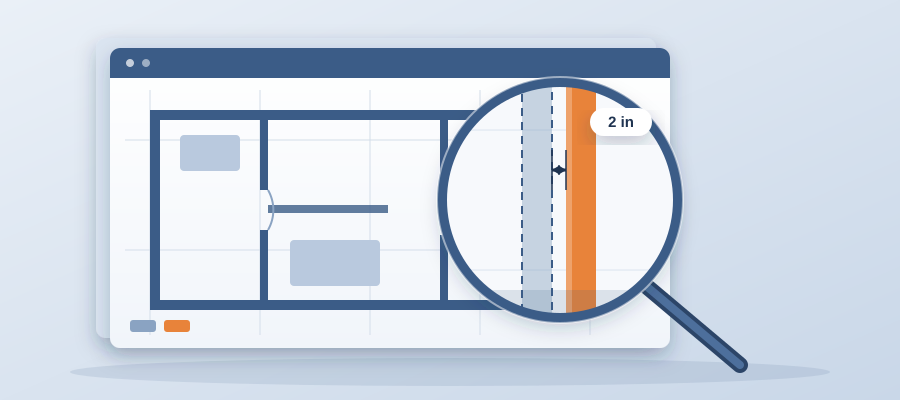
Your client shifts a wall two inches. It does not seem like much. But that small move means a new header, a changed lintel and a re-run of the framing layout. The change ripples through the model. Most teams find out about these changes at the end of the month, when they are buried in a pile of change orders. By then, it is a fight over who pays for the redo. You lose time, and worse, you lose trust with the client.
BidLight changes that. It lives inside Revit and Navisworks and keeps every publish as a versioned snapshot. The moment you publish after that wall moves, the diff lists it. You see the effect immediately, not weeks later. You walk into the next meeting knowing exactly which elements the move touches and who owns each one. No surprises. No arguments. Just a clear, shared record.
Think about what that means for the job. Every change you catch early is rework you do not have to fight over. It is also a chance to show the client you are on top of things. When you can tell them what a design tweak touches before they ask, you look like a pro. That is the kind of service that wins repeat business and referrals.

The best part? You do not have to compare drawings by hand. Any two revisions compare element by element, grouped by category: structural, MEP, envelope, interior. You see what moved in about 15 minutes, not in a 90-minute meeting. So you can focus on advising the team, not on hunting for differences.
It is not about the software. It is about the control you gain. You stop chasing scattered updates and start leading the conversation. That is a position any coordinator would want to be in.
Why Small Changes Slip Through the Cracks
Most change tracking is manual. You export the Revit model, open it next to the last one and start comparing. It takes hours, often days, and by the time you finish, the design has changed again. You are constantly playing catch-up. Small changes like a shifted wall or a moved window are easy to miss. They do not scream for attention, but they add up.
Consider this: a wall moves two inches, and now the window above it needs a new lintel. That is a new structural member, a changed opening and a different install sequence. The disruption might be small on its own, but multiply it by dozens of changes across a project and you are talking real rework. Miss a few of these, and the schedule shrinks.

The problem is that manual comparison is error-prone. You might catch the big changes, but the small ones slip through. And even when you catch them, getting them to the right people takes time. Meanwhile, the crew is working. You either send a rough note or hold up the project. Neither is a good option.
BidLight solves this by tying the record to the model. Every publish is compared with the last, so changes are caught the moment they are published. It is not about replacing the coordinator. It is about giving you a safety net that catches what you might miss. You still apply your judgment, but the grunt work is done.
Think about the last time you had to redo a comparison because of a design change. How many hours did you lose? How much frustration did it cause? BidLight eliminates that. You get the list in minutes, and you can spend your time on higher-value tasks, like walking the critical issues or briefing the trades.
The Real Cost of a Missed Change: A Concrete Scenario
Let's walk through a realistic scenario. You are coordinating a commercial fit-out. The client decides to shift a partition wall by two inches to accommodate a new furniture layout. It sounds harmless. But that shift means the wall's top track needs a different connection, the door frame needs adjustment and the electrical outlets need to move. Each of those changes has an owner.

Without a versioned record, you might not catch this until the next model review, which could be days later. By then, the framing crew has already built the old line. The fix goes through the formal process, which involves paperwork, approvals and negotiations. The client might push back, and you are stuck in a back-and-forth. Eventually you settle, but you have lost time and goodwill.
With BidLight, the moment you publish after the wall moves, the diff lists every affected element. You pin an issue to each and tag the owners. You walk into the client meeting with a clear list of what changed and who is acting. The client sees you are proactive. They trust your record. There is no fight, because you are not reacting. You are leading.
The impact on the job is real. A clash caught in the model costs about $50. The same clash found in the field costs $5,000 to $50,000, and while it waits it can burn $15K to $50K a week in idle field labour. That is the difference between a two-inch wall move that gets handled on a Tuesday and one that stops a crew.
And it is not just about change orders. The record becomes something you can show. Each issue closes with a screenshot, a tagged user and the model commit that fixed it. You turn a messy thread into an auditable trail.

How to Track Design Changes Without Losing Your Mind
The construction industry is shifting toward more collaborative, model-driven workflows. If you are still using spreadsheets and email threads to follow changes, you are spending time on tasks that should be automated. The question is, how do you keep up with design changes without constantly redoing your work?
The answer lies in software that connects your BIM model directly to the people who must act. BidLight does this by running inside Revit and Navisworks. You do not have to chase exports or reformat anything. You just work in your model as you normally would and publish. BidLight handles the rest.
It is not just about the software, though. It is about adopting a habit of continuous visibility. Instead of waiting for milestones, you compare at every design iteration. That way, you are always in the loop. You are never blindsided by a change that happened weeks ago.
BidLight also keeps the history in one place. So you are not hunting through 47 versions of the same markup. You see the author, the files and the milestone for each revision. That is crucial when you are trying to keep the schedule and protect the budget.

One of the biggest benefits is the time savings. A comparison that used to take days comes back in minutes. You review the results and assign the owners. You can spend more time on strategic work, like reviewing risk and sequencing the next phase.
Turning Visibility into Accountability
Architects and engineers often avoid committing to a change early. It is too risky. Everything moves, and you do not want to lock in a decision that might be wrong. But the team needs a clear picture to make good calls. That is where you can step in.
With BidLight, you can give the team an honest answer fast. Because every publish is compared, you can show how a design choice touches the work. You can explore alternatives and see what each one moves. That is a valuable service.
The 6am digest keeps it honest. It tells each owner the issues they hold. The project view shows who is behind while there is still schedule left to move work. When you can say, "If you move this wall, these six elements are affected and these three people own them," that is worth something.

BidLight makes it easy to run this way. You do not need to be a scheduler. You just need the record and the willingness to be proactive. The software does the heavy lifting. You provide the judgment.
And when you hand over a clear record early, you establish trust. That trust carries through the project. When a change does happen, you are the one who catches it first. You are not the one scrambling to catch up. That is a reputation that wins projects.