The 6am Digest: Because Nothing Should Wait in an Inbox
The First Hour of the Day Is Already Billed to Someone
Six people on a mid-size commercial job. Every morning, each one scrolls a thread to figure out who owns what. That is a lot of labour spent before anyone touches the model. Stack those mornings across a build and the hours climb fast.
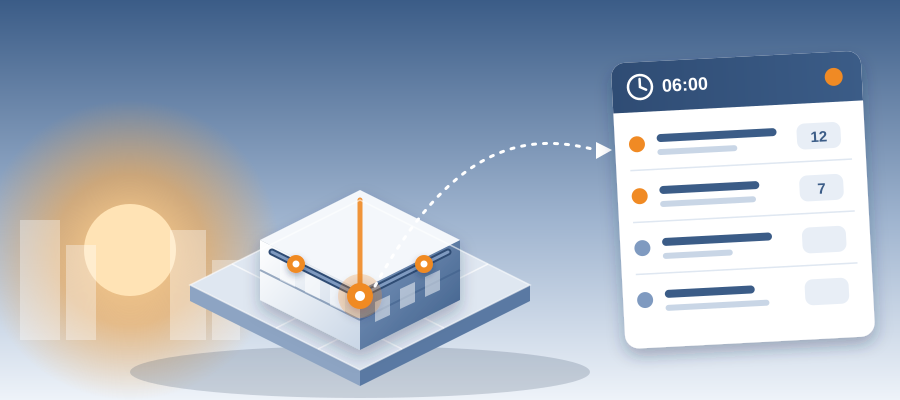
The fix is not more meetings. It is not another tracker nobody updates. It is one short email at 6am that says: here are the issues you own today. You publish the model, the comparison runs on the revisions, issues stay pinned to their elements, and by the time your superintendent opens his phone, the list is sitting there. A short read. Then the rest of the day is spent on the job.

BidLight runs that digest off the same live record of the project that versions every export. The clash you were assigned, the issue waiting on your reply, the wall that moved two inches and touched your scope: all of it is pinned to elements in one place. When you close something, you tag a resolution screenshot and link the model commit that fixed it. Next morning, it is not in your digest. It is closed, with a receipt.
That receipt matters more than people admit. When a client asks why the mechanical rough-in slid a week, you do not reconstruct the story from memory. You pull the thread. Here is the issue, here is who owned it, here is the screenshot, here is the commit that resolved it. That is a defensible answer, not an apology.
Why One Live Record Beats Six Well-Meaning Inboxes
The inbox is a terrible project manager. It has no idea which of the sixty messages in a thread you actually own. It cannot tell the difference between an FYI and a decision waiting on you. And it definitely cannot tell you what that decision does to the schedule. A thread is a pile of text. A live record is a map of the building, with people pinned to it.
So that is what BidLight keeps. One versioned record of the project inside Revit and Navisworks. You publish from the model and each publish is a snapshot with its own files, author, and milestone. When the design changes, the next publish shows it, and any two revisions compare element by element. The comparison is not a separate chore you do on Friday. It is a byproduct of the model you were already running.

The comparison groups what changed by category: structural, MEP, envelope, interior. BidLight does not run automated clash detection. It tracks the changes and the clashes and issues between revisions, pinned to the elements. The coordinator is not gone. The coordinator stops being a copy-paste machine and starts being the person who knows which handful of changes needs a second look. That is a much better use of senior time.
Every issue in the digest is pinned to the geometry it concerns. Not a room name. Not "Level 3 east." The actual duct, the actual beam, the actual wall segment, carrying the sheet and revision that raised it. So when the digest says you own an issue, you click and you are staring at it in the model. No hunting. No "which grid line was that near." The morning triage stops being archaeology.
What Changes When Ownership Is Visible
Here is the practical shift. A wall moves two feet during a design review. That used to trigger a chain: someone notices, someone flags it, someone re-checks the affected scope, maybe next week, maybe after the trades have already drawn against the old layout. With one live record, the comparison shows the delta the day you publish. You see the change, not a surprise on site three months later.

The review lands in about 15 minutes instead of a 90-minute meeting. That is the difference between answering the architect's question while you are still on the call and promising to get back to them Thursday. Teams that answer on the spot keep the client's trust, because nobody has to wait while yours cooks.
That speed also changes the deliverable. Early reviews turn into a service you can offer, not a cost you swallow to win the job. Three early-design questions a client will value having answered become a product line: what does this option touch, what does that move touch, who has to act on it. You are not giving away your BIM brain. You are charging for it, with a versioned trail behind every answer.
The clash side gets the same treatment. Clashes do not sit in a spreadsheet waiting for a coordination meeting. They get assigned, show up in the owner's 6am digest, get resolved during the day, and close with a screenshot and a model commit. The next coordination call starts at what is still open, not at re-reading last week's minutes. The median issue closes in about 7 days.

The Questions This Answers Before Anyone Asks
Who owns this? The digest says. How long has it been open? The issue says, and the project view shows every issue against its owner. What changed since Friday? The comparison, not somebody's recollection of the meeting. Three answers, one email, and you find out who is behind while there is still schedule left to move work.
If you run an AEC firm, you already know the pattern. The expensive mistakes are not the dramatic ones. They are the small ones that sat unnoticed because they landed in the wrong inbox. A submittal nobody checked against the model. A change decided in a hallway and never recorded. A fix that never got documented. A clash that sits 47 days can burn $28,000 in idle field labour. The 6am digest is a small habit with an outsized effect on all three.
It also gives you something to hand the client. Not a status report you wrote at 9pm. A record. Every export versioned. Every issue pinned to geometry. Every resolution signed with a screenshot and the commit that made it true. When you sit across the table and defend a decision, you are defending the model, not your memory of the model.
People ask how often you should be communicating on a job like this. The honest answer: more often, in smaller doses, to fewer people. One targeted digest beats a daily all-hands and beats a thread that half the team has muted. It is not a slogan. It is a workflow you can describe in one sentence and demonstrate in one morning.

The plans are deliberately plain. Basics runs $260 per licence per year. Max runs $590. Custom Enterprise sits where it sits, based on what you need. Every plan includes unlimited projects. Beyond software, BidLight does done-for-you BIM work: execution plans, 4D sequencing, fabrication detailing and spooling. The pitch is simple. Stop chasing scattered updates. Stop losing 11 hours a week working out which model is current. Catch the clash in the model for about $50 instead of the field for $5,000 to $50,000.
What You Actually Remember About BidLight
One live record of the project inside Revit and Navisworks, kept as the work happens. That is the whole thing. The 6am digest is just the part you feel first, the part that replaces the morning inbox triage with a short read over coffee.
Everything else follows from that one record. The model changes, the comparison shows it. An issue gets assigned, it gets pinned, it gets closed with proof. The project view shows who is behind. Your team stops asking who owns what and starts closing things.

Set it up on one project. Watch the Monday after a design change. That is where the argument for it gets made.