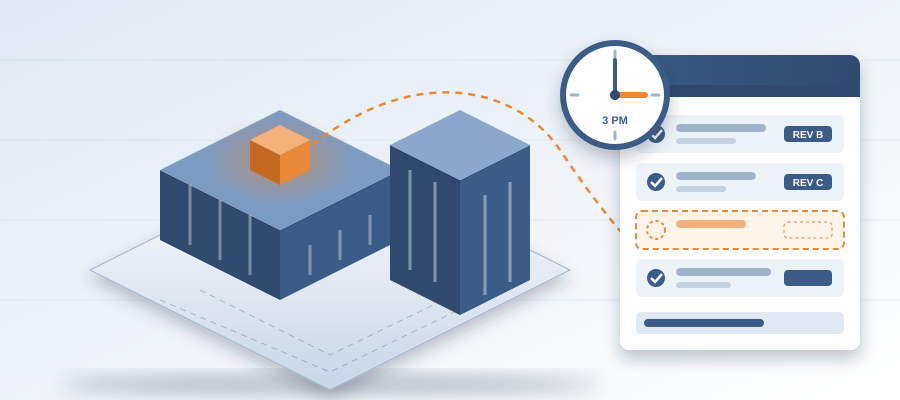
The 3 PM Model Change No One Recorded
The 3 PM Change That Never Becomes a Record
A mechanical sub opens the model at 3 PM and nudges a duct run eight inches to clear a beam. Your PM looks at the screen, nods, and says approved. That is a real decision with real consequences. The problem is that it never gets written down anywhere.
By 4 PM the sub is gone and the model is saved. By Friday the plumber, the electrician and the framer are still working off the version someone exported Tuesday morning. The change is in the model and nowhere else, and nobody notices until a crew hits the beam.
Most firms lose time and money here not because someone made a bad call, but because the call never reached the people it affects. The decision lives in one room. The model lives in another. Every change reopens the gap between them, and every gap is rework you eat.


Here is what that eight-inch move touches on a mid-size job. Re-routed duct, hangers moved, maybe a fire damper relocated, and a ceiling that now sits lower. Do that ten times in a week and you have a stack of changes that no one can point to a decision for.
A weekly review of exports cannot catch this. Neither can a PDF. The only way to catch the 3 PM change is to see it while the PM is still standing at the desk, which means the record has to ride on the model itself.
What It Costs to Find the Gap Four Days Late
Say your team catches the drift on Friday and tries to reconcile. A coordinator pulls the old export and the new one. Someone walks the sub through what changed. Someone else calls the architect to confirm the duct move was approved. Three people, half a day each, and you still have not told the trades. That is the cheapest version of this problem.
The expensive version is the one where the gap survives reconciliation. You miss it, the trades keep building to the old layout, and the clash reaches the field. A clash caught in the model costs about $50. The same clash found in the field costs $5,000 to $50,000. Now you are running work against a change you never agreed to, and you cannot show anyone a dated record of what moved and when.
Procurement and the field are where it goes from annoyance to real money. Material gets ordered off the old layout, the sub commits to it, and now you are buying duct for a route that stopped existing. Field labor gets scheduled to the old layout and stands around waiting on a coordinated drawing. Every day you do not have the change on record is a day the field is guessing.


This is the part nobody puts on a slide. The cost of a late change is not just the change. It is the rework, the idle crew, the extra RFIs, and the phone call with the client where you have to explain a slip. An unresolved clash can burn $15K to $50K a week in idle field labor. Firms track the direct cost. Almost nobody tracks the chase.
That chase is where the real number hides. If your coordinator spends a day a week reconciling model versions against a stale markup, you are paying for the activity of catching up. And 11 hours a week lost to working out which version is current is a job that should not exist.
Why a Stale Record Feels Like It Is Still Fine
A stale record does not announce itself. It looks like the same markup your team shared last time. The issue list adds up. The sheets match the last PDF. Nothing on the page says Tuesday.
That is exactly why the 3 PM change gets missed. The document feels current because it was current when someone exported it, and nobody goes back to check the timestamp against the model. The gap between model time and record time is invisible from the desk.
Most coordination setups treat this as a scheduling problem. Sync nightly, review weekly, send a report Friday. That cadence works fine when the design stands still. It falls apart the second a sub moves a duct on a Tuesday afternoon.


What closes the gap is element-level comparison. When the model moves, the record has to know which element moved, what category it sits in, and who owns the issue. Not a fresh walk-through from scratch. A diff against the last export, in the same session.
BidLight does this. Every export is a versioned snapshot, compared element by element against the previous one. When geometry moves, the change appears in the comparison, grouped by structural, MEP, envelope and interior. The record does not catch up to the design four days later. The record is the design, versioned.
This is what a working record looks like. One live record of the project inside Revit and Navisworks, so you are never coordinating against a version of the job that stopped existing on Tuesday.
What a Live Diff Looks Like on Tuesday
The sub opens the model at 3 PM. He moves the duct run. He publishes. On your machine, the comparison registers the change. The old duct route is flagged, the new route is in, the hangers and the ceiling above it show as changed elements, and each one can carry an issue with an owner. The whole update takes minutes, not a day.
Your PM pulls up the comparison before the sub leaves the room. Six elements changed, dated 3:07 PM. The PM approves the change and pins an issue to the duct, tagging the ceiling trade and the sprinkler foreman. That is a recorded decision created at the moment it was made, not four days after it when everyone has moved on to another problem.

The issue carries the sheet and the revision it came from. When the fix lands in the next publish, the issue closes only with proof: a screenshot, a tagged user and the model commit that delivered it. That means the duct move does not come back on site as a surprise.

The PM does not need to chase. The coordinator does not need to run a meeting. The change in the model produces a change in the record, and the record is defensible because you can trace it back to a timestamp, an element and an owner.
That is the part that changes your week. You stop running reconciliation meetings. You stop catching up on Friday. And the 6am digest tells each trade which issues it owns, so nobody discovers on Monday that their crew built to a layout that died on Tuesday afternoon.
Putting the Software Next to the Change You Just Caught
People ask what coordination software costs before they ask what it replaces. The honest answer is that it depends on how much you are currently losing to stale versions. BidLight runs from $260 per licence per year for Basics to $590 for Max, with custom Enterprise pricing above that. Unlimited projects are included on every plan.
One 3 PM change that reached the field unflagged can cost $5,000 to $50,000. That is the whole math. A single caught clash covers licences for a long time. A week of idle crews behind an unresolved one costs more than years of licence spend.

If you are evaluating coordination tools, run this test. Ask what happens to the record when the model changes at 3 PM on a Tuesday. If the answer involves a re-export, a rerun or a meeting, you already know where your schedule goes. The features list will not tell you that. The Tuesday afternoon will.

If you are tempted by a shared folder and a spreadsheet, understand what you are getting. Those tools hold a static snapshot. They do not diff a model, and they cannot tell you which element changed when geometry moved. That is fine for a one-time review. It is not fine for a live job.
The number that should anchor your evaluation is not the licence cost. It is the size of the gap you have been closing by hand. Weigh the software against that gap, and the decision gets very short.
The Only Record That Survives Friday
A live record is not a record you update faster. It is a record that is already current every time you look at it. The difference sounds small until you are the one explaining a field slip to a client on a Friday afternoon.
One live record of the project inside Revit and Navisworks. That is what BidLight does. When the design changes, the record changes. Not after a sync, not after a meeting, not after someone exports a fresh PDF and starts a new walk-through. In the same session, at the same minute, with the same elements the designer touched.

The 3 PM change becomes an issue by 3:07. Your PM approves a change with an owner, not a guess. Your Friday record matches your Tuesday record because the model and the issue list never got out of step in the first place.

The work you are already doing does not change. People still move ducts. Clients still change layouts. Subs still show up with a fix. What changes is the gap between the decision in the model and the record on the job. That gap is where your schedule has been going, and it is the only thing worth closing.
If you remember only one thing, remember the mechanic. The change is in the model, so the issue should be too. Everything else is just a faster way to find out how much the delay would have cost you.