Won the Job After Pricing the Model
Six months ago my job stopped at the drawing set. I modeled walls, fixed the door schedule, made sure the sheet set printed clean, and went home. Nobody asked what a wall assembly cost. Nobody invited me into a room with a client. Then one Tuesday my director asked me to sit in on a budget call because the senior estimator was out sick. I answered every cost question the client raised without opening a spreadsheet.
Before that day, pricing was somebody else's problem. The estimating team argued about a takeoff two rooms over, hunting through a stack of supplier quotes to confirm a number before a client call. Change orders showed up on my desk after the fact, as a line I had to redraw, never as a cost I had a say in. I could tell you the exact square footage of every room in a building. I could not tell you what it would cost to reframe one of them.

That changed when I started running cost checks straight out of Revit during design development, not after the fact. I exported the model and, within minutes, had labor, material, and equipment numbers broken down by line item, tied to the geometry I had just drawn. When the design team swapped a curtain wall system mid-review, I pulled the updated number before the meeting ended instead of promising to get back to everyone next week. The first time that happened, the room went quiet for a second, then somebody asked me to run the same check on the next option on the table.
Within two months my director stopped inviting the senior estimator to early client budget conversations and started inviting me instead. One client wanted to know, on the spot, what switching a slab from post-tensioned concrete to a conventional pour would do to the schedule and the number. I had an answer in the room, with the line items behind it, not a promise to follow up by email. That is the moment the conversation about my role changed from what I could draw to what I could defend.

Nobody gets promoted for knowing where the doors go. Firms keep drafters who are fast and estimators who are trusted, and the difference between those two roles has nothing to do with which software license sits on your desk. It comes down to one skill: can you stand in front of a client or a partner and defend a number line by line, not just hand over a total. That is estimation fluency, and it is learnable, but almost nobody teaches it on purpose.
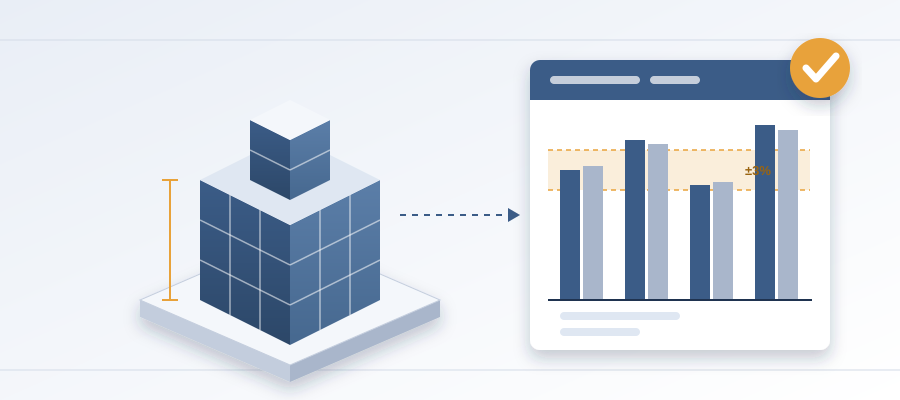
Part of what let me defend numbers with confidence was knowing where the estimate came from and how reliable that source actually was. The tool I worked with classifies line items against a live pricing database. Two AI models read geometry and metadata, landing at 86 percent accuracy. That is a real number, and once I understood it, I stopped treating the software output as gospel and started treating it as a first draft I was responsible for checking. Firms are starting to track estimating accuracy benchmarks the same way they track win rate, because a number that is close but unexplained can cost you almost as much as a number that is wrong.
A subcontractor's rough number on a mechanical package came in well above what our pricing database showed for a comparable scope. In the old workflow, that gap would have sat there unresolved until somebody with more seniority than me had time to dig into it. Instead I pulled the RSMeans and Craftsman comparisons behind our number, walked through the assumptions with the project manager, and found the subcontractor had priced in a lead time premium we hadn't accounted for. Catching that before it hit the client budget is a small thing on paper and a career-defining thing in a performance review.

None of this is about trusting a piece of software blindly. It's about having a defensible starting point so the hours you spend go toward checking judgment calls instead of re-keying quantities from scratch. That change is what actually helps cut estimating errors, because the errors that hurt firms rarely come from bad math. They come from stale numbers, missed scope, and nobody catching the gap before the client does.
Our firm didn't stop at trusting a single accuracy figure either. Every quarter, someone compares our early estimates against what jobs actually closed at, and that comparison is becoming its own kind of scoreboard. It's less about chasing a perfect score and more about knowing where the gaps tend to show up, so you watch that scope extra carefully next time around. Once you start tracking accuracy like that, on purpose, you stop guessing whether your estimate is any good and start knowing it.

So I stopped handing over a single total and started presenting cost breakdowns as a report people could actually follow. I grouped line items by trade, tracked how each one moved across design revisions, and showed leadership which decisions were actually driving the budget instead of burying that in a spreadsheet nobody opened. A partner told me later that was the first time he had seen a cost conversation where he could point to a specific wall or duct run and know exactly why the number moved. That kind of clarity is hard to walk away from once a firm has had it.
Three months after that first budget call, my title changed from CAD technician to estimator, with a raise that reflected it. Nobody promoted me because I drew faster. They promoted me because I could sit in a room and answer the question every client eventually asks: why the number is what it is. That question used to end conversations. Now it starts them, and I am the person in the room who can answer it.
None of this required a finance degree or years shadowing a senior estimator. It required working inside a model that already prices itself, so every design decision came with a cost attached instead of a guess. If you already model in Revit, you are one export away from seeing labor, material, and equipment numbers tied to the geometry you drew this morning. The skill is not learning the interface. It is learning to read what the software gives you and knowing when to trust it and when to push back.

The database behind those numbers costs roughly $30,000 a year to maintain and works alongside RSMeans, 1Build, and Craftsman, so the starting point is close enough to defend from day one. The estimates update as the design changes, which means you catch a cost swing the moment a wall moves instead of finding it at the next milestone review. That is what let me answer questions live instead of promising a follow-up email. It is the difference between reporting on decisions after they are made and being part of making them.
I talk to other CAD techs now who assume estimating is a separate career path they would have to leave drafting behind to chase. It is not, not anymore. The people who already understand how a model goes together are the ones best positioned to explain why it costs what it does, because they know which wall is load-bearing and which duct run was a late addition. Firms would rather promote from inside the model than hire an estimator who has never opened one.

If you are a drafter or a BIM tech reading this and wondering how somebody gets pulled into the budget meeting, the answer is not seniority. It is whether you can point to a number and explain where it came from. Start running cost checks inside your own models, get comfortable defending what they show you, and the meeting will find you. Mine did.